Why Certain Materials Feel Better In The Kitchen
In the kitchen, much as within the broader architecture of life, certain things possess an inexplicable propensity to manifest as inherently more gratifying. That’s how it is; there’s nothing we can do. The finest always rises, and life is nothing if not a continuous audit of what rises and what doesn’t, using a bureaucratic mechanism to distinguish what is substantive from what is merely spectacle. Basically, cheese is still cheese, which is to say that you cannot masquerade as depth. You may adorn it, even ceremoniously, and still for nothing. What is superficial will inevitably betray itself, for reality always endorses. This idea implies that reality functions as a de facto arbiter of authenticity, systematically offering legitimacy exclusively upon those phenomena whose intrinsic properties withstand sustained scrutiny, while simultaneously exposing and negating any attempt at artifice or superficial simulation. This principle, though abstract, finds a direct corollary in the materiality of the kitchen.
For the purposes of this analysis, this article is sectioned into four discrete categories of materials (marble, wood, stainless steel, and ceramic tile), each examined in terms of its intrinsic properties, operations, behaviors, and the specific sensory or functional gratifications it affords.
Stainless Steel
Stainless steel feels different from other materials because it gives a clear signal: “I can handle a mess.” There is a reason restaurant kitchens are full of it. It doesn’t absorb anything, not water, not oil, not odors. You can wipe it down ten times a day, and it won’t wear out. The metal also tolerates extreme heat. If you place a hot pot on it for a second, nothing dramatic happens. There’s no discoloration, or crack. It’s just stable. For people who cook often and quickly, this reliability makes life easier.
One interesting detail is how stainless steel affects kitchen lighting. Because it reflects light, it can make a small or dim space feel brighter. This is a practical benefit most people don’t consider until they see the difference. The same quality applies to other contemporary surfaces, for they can quietly transform a kitchen, catching light without demanding constant care. You can check the options offered by Kitchen Warehouse Ltd to have a better idea of the designs you could incorporate in your home.
Furthermore, in terms of construction, stainless steel is strong but not overly heavy, so it doesn’t put much strain on cabinets or wall mounts. That’s why it’s common for sinks, hoods, and worktops. Some people dislike fingerprints on the surface, but newer finishes reduce that issue. And for most, the trade-off is worth it.
Marble
People like marble in the kitchen mostly because of how it behaves, not only because it looks expensive. The first thing you notice when you touch it is the temperature. It’s naturally cool, almost like it has its own climate. Bakers love it because pastry dough stays firmer on a cold surface. Chocolate doesn’t melt as fast either. Marble also has weight, literally and visually. When you lean on it, it doesn’t feel hollow or flimsy. It feels like something that’s been around for centuries, and that matters to people who want the kitchen to feel solid and long-lasting. The veining comes from minerals trapped in the stone over time, which means no two slabs are identical. If someone wants something “unique but not loud,” marble fits that need without trying too hard.
Now, the downside is that it stains and scratches if you’re rough with it. Lemon juice, tomato sauce, and anything acidic will leave a faint mark if the surface isn’t sealed. But many homeowners don’t mind these imperfections because the stone slowly develops a kind of patina.
See also: Caroline Goldsmith’s Approach to Nurturing Young Minds
Wood
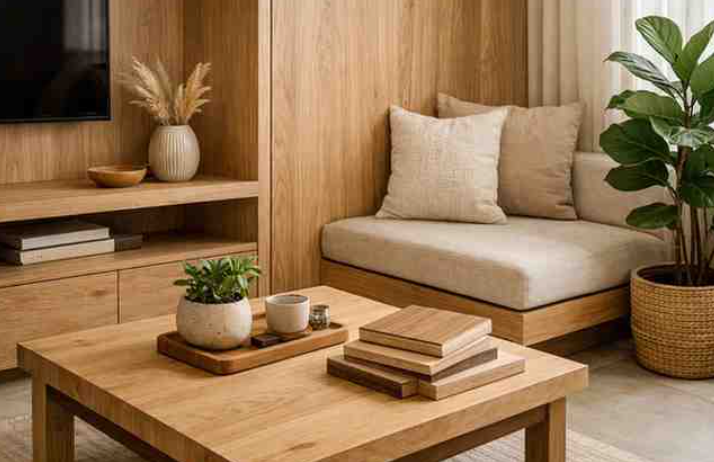
Wood instantly changes the atmosphere of a kitchen. Part of it is that it doesn’t feel cold when you touch it. Even during winter, a wooden countertop has a gentle warmth that makes food prep more comfortable. It’s also kinder to tools. A knife edge lasts longer on wood than on glass or marble. That’s why butcher blocks have survived for centuries. The fibers in hardwoods like maple or walnut are dense enough to withstand chopping, yet soft enough not to destroy your knives. Furthermore, wood has another practical quality. You can fix it. If you drop something heavy and dent the surface, you can sand it. If it stains, you can refinish it. That makes wood a long-term investment instead of something you replace every few years.
There’s also the hygiene factor that people often misunderstand. When moisture gets into a wooden surface, the fibers swell slightly, trapping bacteria, which then die off as the wood dries. Studies by food-safety researchers have shown that wood is safer than plastic cutting boards over time, as long as it’s cleaned properly.
Ceramic Tile
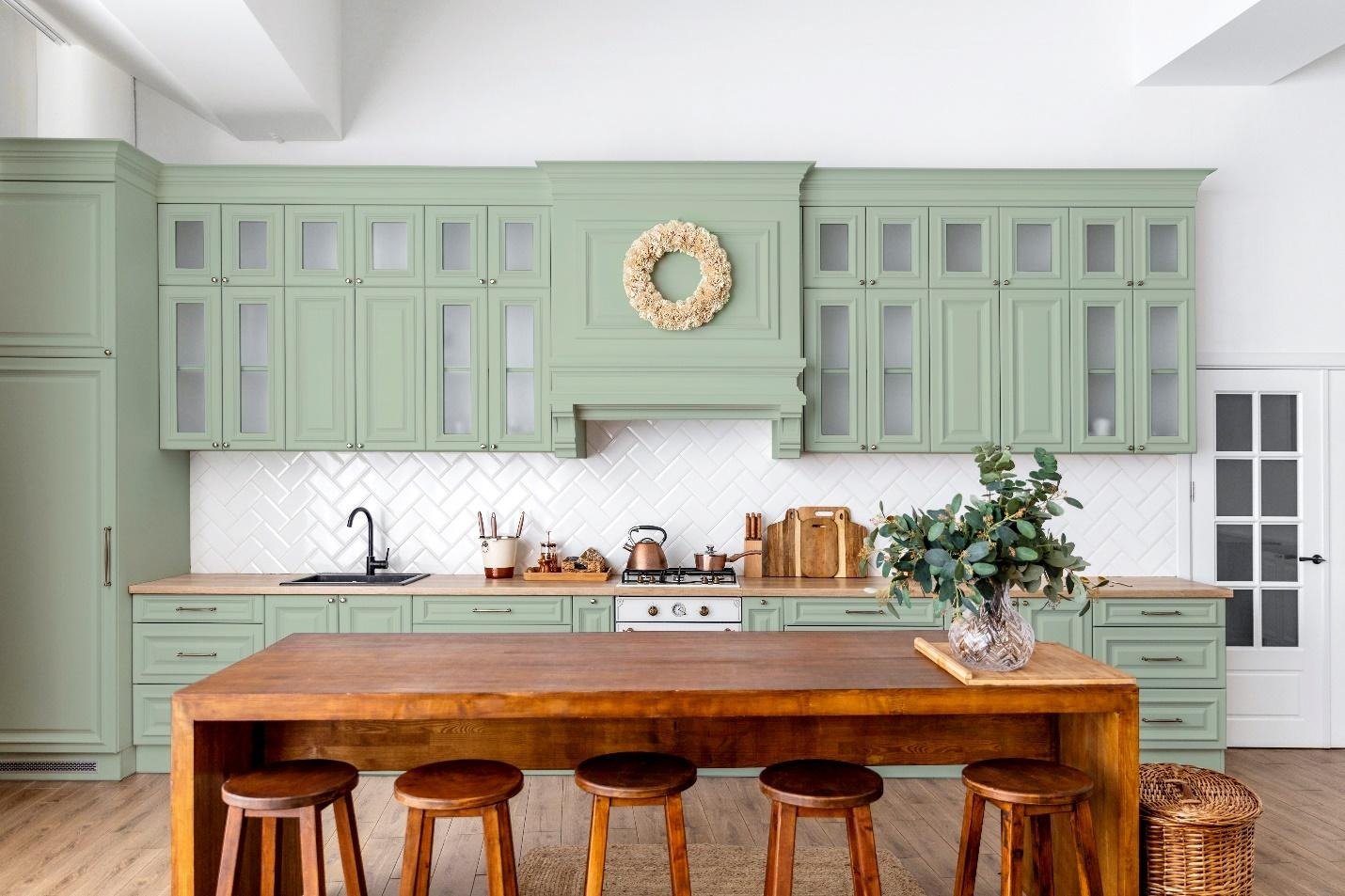
Ceramic tile works well in kitchens because it’s tough and easy to maintain. The tile is made from clay fired at high temperatures, making it hard enough to resist scratches from everyday use. When it’s glazed, the surface becomes practically sealed. Thus, liquids sit on top rather than soaking in, helping prevent stains. Furthermore, heat is another point in the ceramic’s favor. You can place hot dishes on a tiled counter or backsplash without worrying about damage. Ceramic floors also remain stable even when exposed to steam, spills, and frequent cleaning.
One practical advantage is the variety of textures and finishes. Some tiles mimic stone; others are completely smooth or slightly matte to reduce slipperiness. Homeowners often use tile when they want a specific color or pattern that natural materials can’t provide.
The main drawback is comfort: ceramic is hard and doesn’t give underfoot. People who stand in the kitchen for long periods may use mats to ease joint strain. But from a maintenance perspective, ceramic is one of the easiest options. A basic cleaner is usually enough to keep it looking new.