When Speed Exposes the Weakest Part of a Process
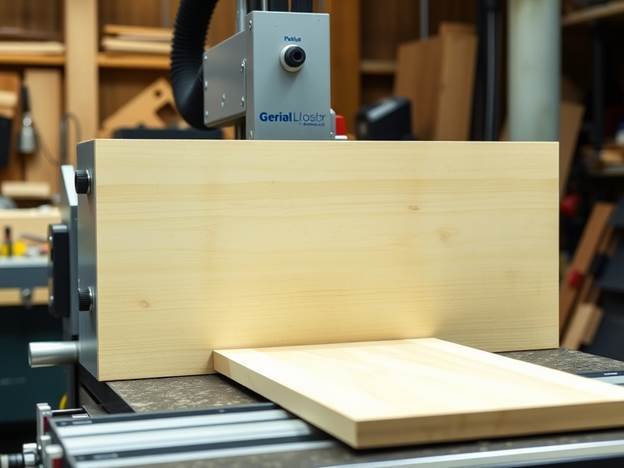
In workshops where production runs at pace, mistakes rarely happen where people expect them. They show up downstream, during fitting, alignment, or final checks, long after the original action that caused them. Cutting is often that action. Decisions made in seconds at the start of a job shape everything that follows, which is why automatic saws tend to reveal their value only when volume increases.
When work is slow, inconsistencies are easier to absorb. A slightly uneven cut can be corrected. A length that’s a millimetre out can be adjusted by hand. As speed increases, those corrections become interruptions. What was once manageable becomes disruptive.
Why Early Accuracy Reduces Later Friction
Every manufacturing process relies on assumptions. One of the most important is that components arrive at each stage in the condition expected. Cutting errors undermine that assumption immediately. They force compensations later, extra measuring, additional trimming, or subtle workarounds that never appear on process charts.
Automated cutting removes much of that uncertainty. Lengths remain consistent across runs. Angles repeat without interpretation. The system does the same thing every time, regardless of pace or pressure. That reliability allows later stages to operate without constant verification.
The impact isn’t dramatic, but it’s cumulative. Fewer pauses. Fewer checks. Fewer moments where something doesn’t quite line up and no one is sure why.
The Relationship Between Throughput and Control
Speed without control creates waste. Control without speed creates bottlenecks. Cutting sits directly between the two. When output increases, cutting becomes a pressure point because it feeds everything else.
Automation helps stabilise that pressure. It allows throughput to rise without increasing variation. Instead of relying on individual judgement under time constraints, the system maintains standards quietly in the background.
This shift changes how teams work. Operators move from constant correction to supervision. Attention shifts toward material flow, setup accuracy, and quality monitoring rather than repetitive execution.
Read Also: Exploring the Role of Technology in Mental Health Care
Safer Workflows Are Usually More Predictable Ones
Cutting has always carried risk. Fast moving blades, rigid materials, and repetitive motion create conditions where fatigue and distraction matter. Automation alters that relationship by reducing direct interaction with the cutting action itself.
Predictable movement and defined operating cycles limit exposure. Hands spend less time near danger points. The work becomes more about managing the process than reacting to it. Over time, this predictability supports safer habits without relying on constant alertness.
Precision as a Cultural Signal
Perhaps the less obvious effect of consistent cutting is cultural. When components arrive accurately cut, expectations rise elsewhere. Assembly becomes more disciplined. Tolerances are respected. Problems are easier to trace because variation isn’t coming from the start of the process.
That clarity matters. When faults occur, they stand out instead of blending into background inconsistency. Teams spend less time guessing and more time solving.
Cutting may happen early, but its influence runs through everything that follows. When it’s controlled, the entire process feels calmer. When it isn’t, no amount of skill later on fully compensates.